Understand what is worth showing
Learn what you are proud of, what differs in the work and what customers need to know. Read the material that already carries that knowledge.

Brand & content
You know why your work is good. The challenge is giving someone else enough context to see it. We draw out the knowledge behind the offer, then give it a clear voice and visual form across the places customers meet your business.
Let's talk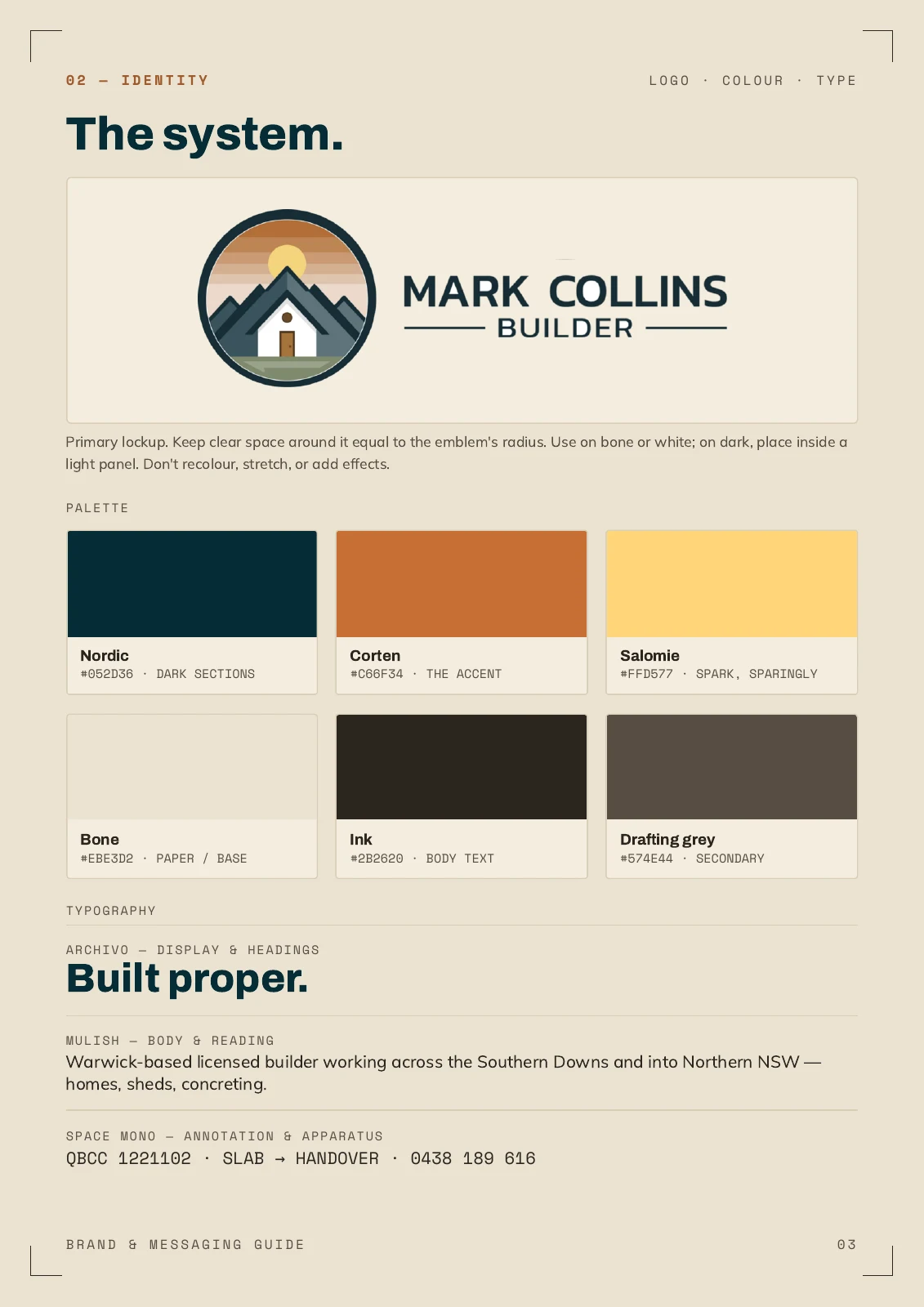
The way you explain an option, the question you ask before quoting or the care that goes into a job can be hard to see from a logo and a few short paragraphs. We look for that substance, then shape it into useful content and a consistent design reference for the next page, brochure or quote.
We agree which parts will help with the job in front of you. These explanations show what the work is there to do for the business and the people using it.
Draw out what makes the business worth choosing and which customers it is trying to help.
Give colour, typography and visual choices a clear reference for later work.
Explain the particular service and the details a customer needs to judge whether it fits.
Put the right information into the brochure, capability statement or sales document being used.
Show the specific contribution and evidence behind a job, with its context and qualifications intact.
Give the next person writing a page or preparing a document something clear to work from.
A focused refresh or a more complete foundation. Where photography, video or specialist production is needed, we agree that scope and who is doing the work.
Where your input matters. Existing quotes, brochures, photographs and the way you explain a job are useful starting material. You help check the meaning and tone; we bring the writing, design and applications together for review.
Yes. We start with what your customers already recognise and what still represents the business well. A clearer message, better typography or more consistent documents may be the useful work.
It should grow from how you explain the work. We listen, read the material you already use and ask about the details a customer needs to understand. You review the draft for accuracy, tone and the things only experience tells you.
Yes. Brochures, quotes, proposals and capability statements are part of how a customer understands the business. We agree which pieces are needed and prepare them for the way you will use and update them.
How the work takes shape
The useful work continues into the next page or document. We connect the message, voice and design decisions, then prepare them for the places your business needs to use them.
Learn what you are proud of, what differs in the work and what customers need to know. Read the material that already carries that knowledge.
Turn that understanding into a clear explanation and visual direction. Review real applications, such as a service page, brochure spread or quote layout.
Organise the approved content, styles and assets so the next document has a useful starting point. Agree the editable formats and guidance needed.
In the work
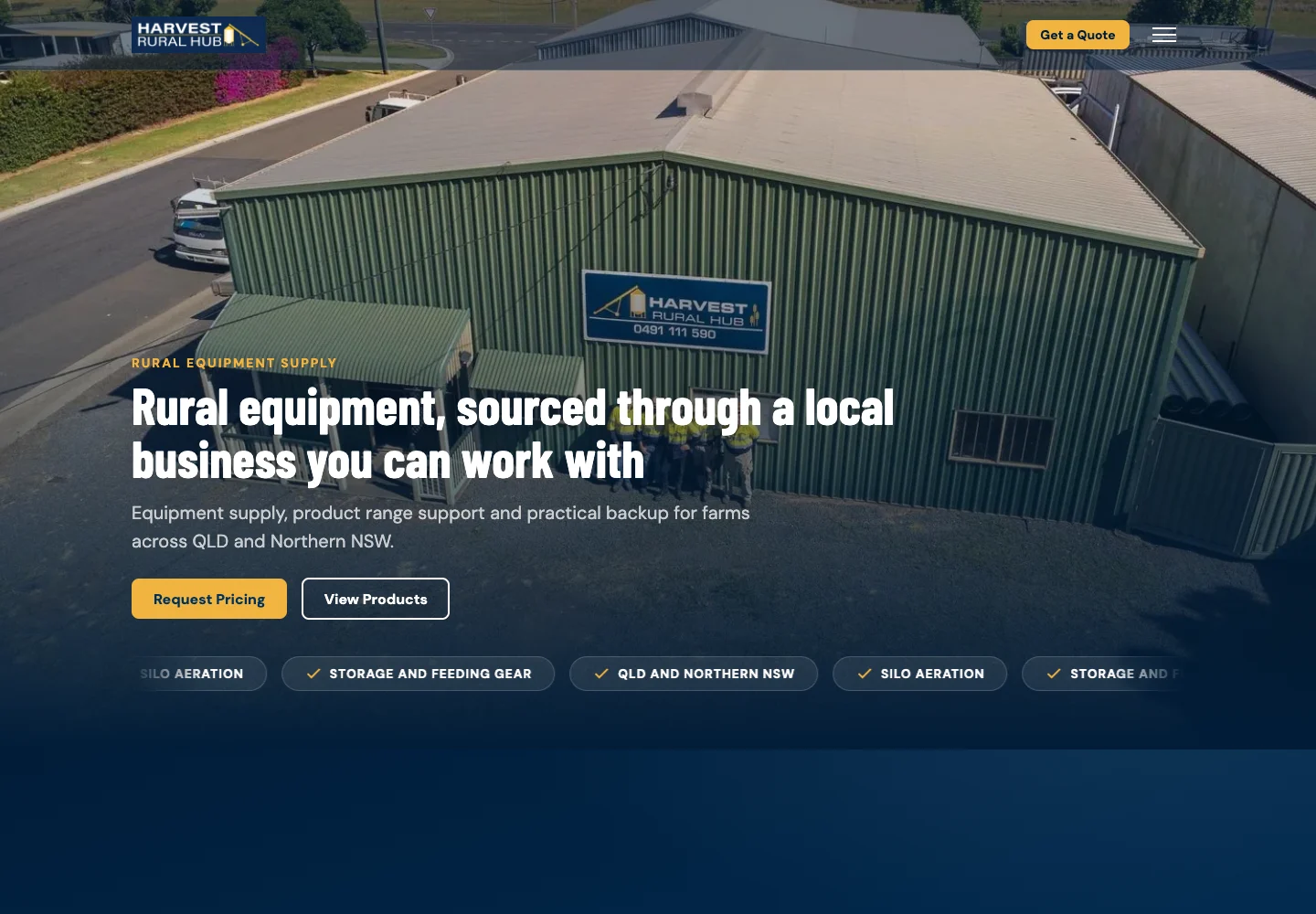
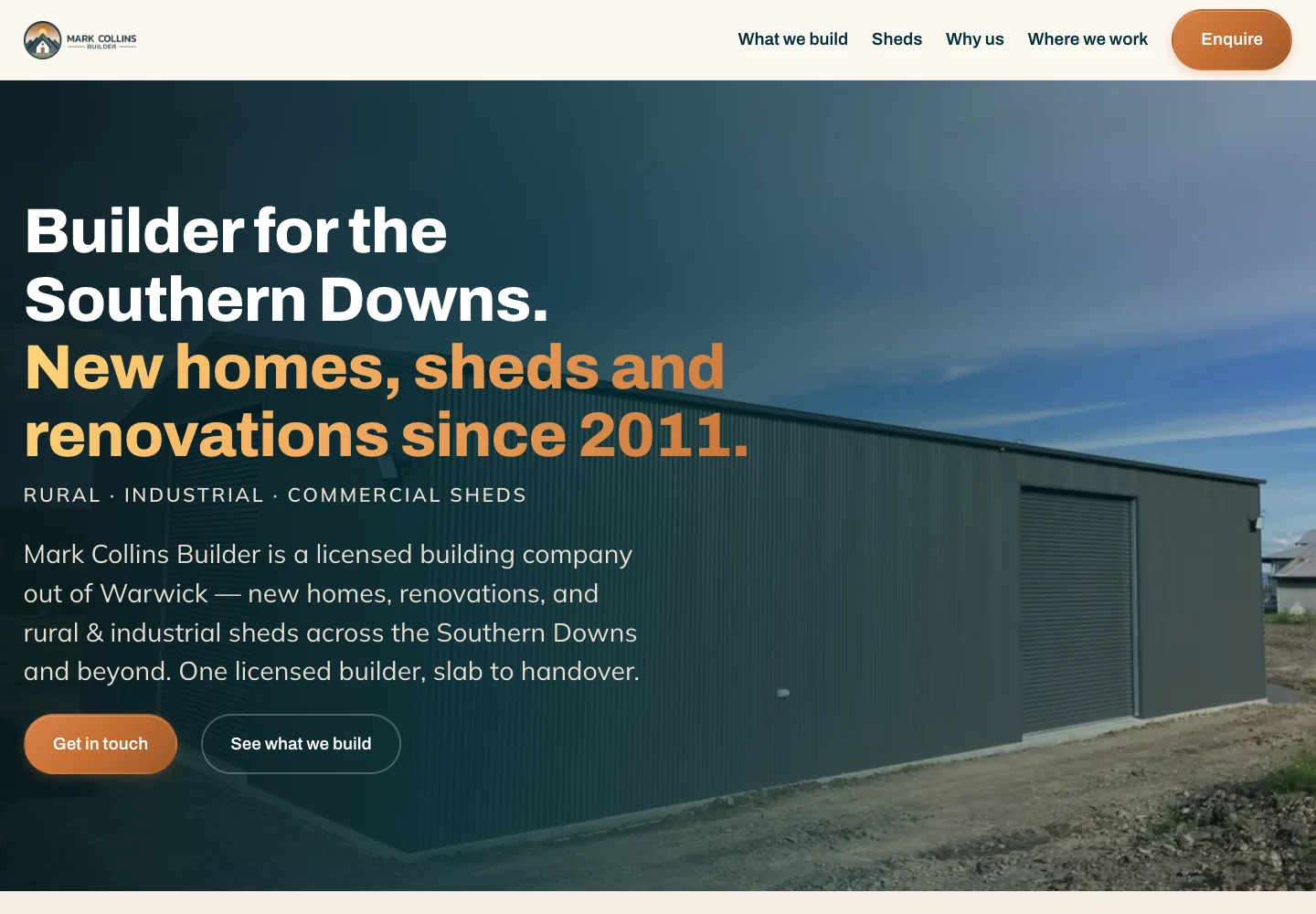
Mark Collins Builder's brand guide and editable quote-template examples show how identity reaches a document. Harvest Rural Hub's illustrated installation manual shows how product knowledge becomes useful content beyond a website.
Useful guides
Make the business easier to recognise and understand, from a page to an everyday document.
Brand & content
A useful foundation carries through to the brochure, the quote and the next piece of content.
Read the guideBrand & content
Decide what to keep, what needs work and what the next person needs to use the brand properly.
Read the guideBrand & content
Use your business knowledge to answer the important questions in language a customer can follow.
Read the guideBrand & content
Choose the right format, organise the information and leave your team an editable source that holds together.
Read the guideBrand & content
Build a useful project story from real decisions, a clear contribution and evidence you have permission to share.
Read the guideThe thinking behind the tools
How we choose the setup, where the work adds value and what needs thought along the way.



Turn the knowledge already in the business into useful pages, documents and assets that stay connected as the business grows.
A useful next step
Start with a few rough notes, a website link or one example of what needs attention. You do not need a finished brief.
Let's talk