How we work

Understand the job.
Then do it with care.

Start with what you have and what you know. We do the work of asking, investigating and drafting, so you can respond to something real. Your knowledge, factual checks and decisions stay central.

Understand the business.

What we handle
Review the website, quotes, brochures, project photos or other material you already have. Ask focused questions about the customers, the work and what is getting in the way.
Your input
Point us to useful material and talk through the business in your own words. No polished brief or finished copy needed.
The next decision
Which problem is worth solving first, and whether we are the right fit for the work.
Give the work a shape.

What we handle
Propose the structure, message and priorities, then set out the deliverables, price, timing and responsibilities in a written scope.
Your input
Check the direction against the business, flag important timing and confirm who will approve the work.
The next decision
What to include, what can wait and whether to proceed with the proposed scope.

Make it tangible.

What we handle
Write, design and build a tangible draft. Bring the decisions together in a preview, with focused questions where facts or judgement need your input.
Your input
Check the facts, tell us what sounds right and gather feedback from the people making the decision in one agreed place.
The next decision
What needs adjusting before the work is ready for final checks and approval.

Check it. Hand it over. Keep it useful.

What we handle
Check the content, links, layouts and important customer paths. Prepare the handover and explain how to keep the work current.
Your input
Confirm the final details and approval. Agree access and who will own future content and maintenance.
The next decision
When to release the work and what ongoing care, if any, belongs in a separate agreement.

Before the page takes shape

Give the content and the build a useful foundation.

The method is there to make the work easier to understand and maintain. It starts with the business, then gives the important decisions a place in the content, the design and the delivery.

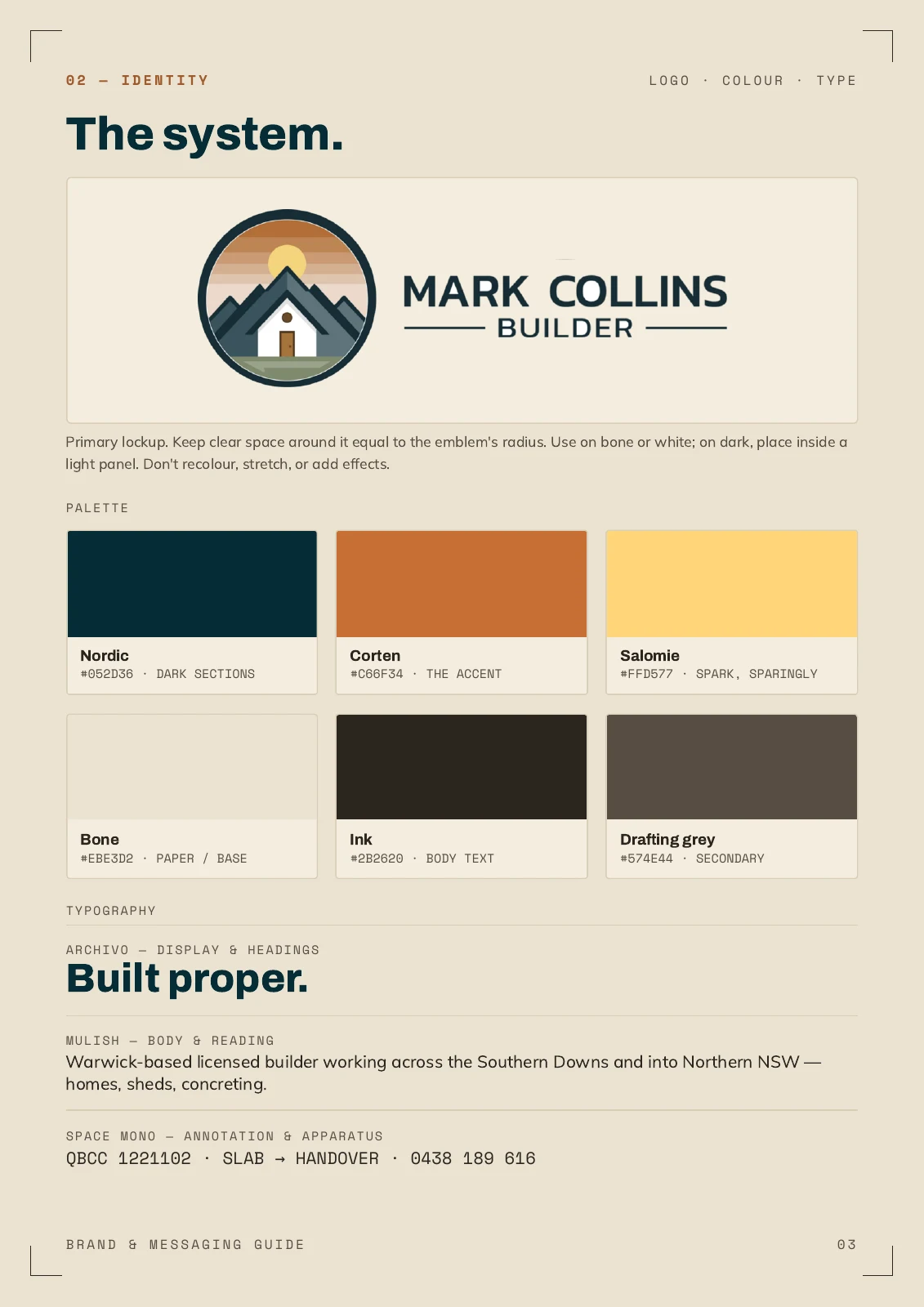
Mark Collins Builder · Brand guideMark Collins Builder brand-guide page showing the logo, six-colour palette and typography roles
June 2026 brand guide, selected page.

Before the build

Find the useful starting material.

I look at the work you already use to explain the business: project notes, quotes, brochures, product details and the questions customers ask. We identify the decision the website needs to support, the facts that need checking and the work worth doing first.

Turning business knowledge into useful content

Brand foundations

Give the next piece a clear reference.

The message, visual direction, voice and approved source material need somewhere clear to live. Those decisions should help with the next page, quote or project story as well as the homepage. Mark Collins Builder's brand guide and editable documents show that connection in practical use.

See the brand and document examples

Content development

Write for the question and the particular offer.

We draw out the details that help someone judge fit: what differs between products, what a service involves and what happens next. I bring back an organised draft to check together. On STANDO, product-specific writing sat within a connected structure of collections, buying guidance and reusable content.

See the STANDO content structure

Design and shared behaviour

Make the foundation maintainable.

Our KD framework keeps the business facts, brand decisions, scope and delivery checks connected. The FX system supplies maintained interaction patterns for our Astro builds, including disclosure, focus and motion preferences, using each site's colour, spacing and layout choices. STANDO's reusable components were built within Shopify's native Dawn and Liquid conventions.

Why adaptable layouts and controls matter

The route behind the form

Know what happened to the enquiry.

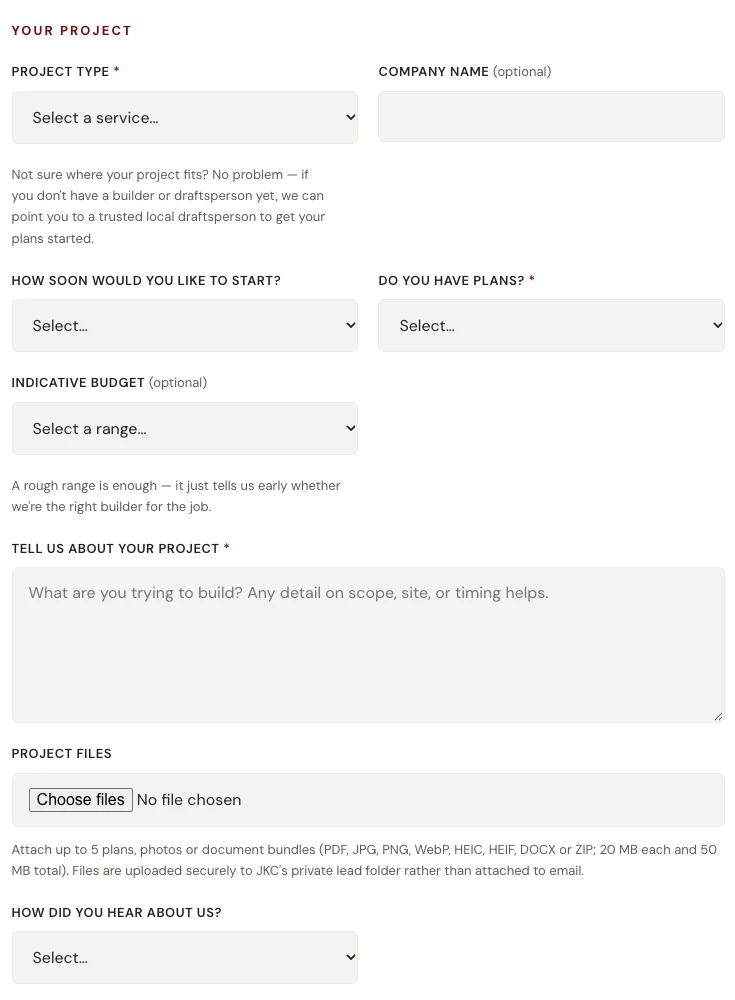
The JKC implementation separates saved receipt from notification. A missed email needs investigating against the record; it should not be treated as the only evidence of whether an enquiry arrived.

A scoped enquiry workflow
  1. Check

    Validate the details and expected files.

  2. Record

    Confirm the saved enquiry and its reference.

  3. Notify

    Tell the appropriate person about that record.

  4. Follow up

    Use the agreed record and recovery route.

A notification can fail after the record is saved. Validation, recovery and follow-up need their own checks.

Understand the enquiry route

Dashboards and reporting

Start with a question the business needs answered.

A reporting screen is useful when you know what its numbers mean. I start with the decision, the available source and the period, then make missing information and the next action visible.

  • What happened, and over which dates?
  • Which page, product or customer task does it concern?
  • Is this an appearance, a click, a saved enquiry or a business outcome?
  • What can we check or act on next?

That might be a focused report, a simple monitoring view or a dashboard within an agreed scope. We agree who maintains the connections and who reviews the findings, so the view has a useful job after handover.

Understand the reporting measures

Connected work

The useful detail goes beyond the homepage.

A website sits among the product knowledge, documents and conversations that keep a business moving. These projects show different parts of that work.

A direct
working relationship.

You work with Josh across the thinking and the delivery. Decisions about the message, the design and the build stay in the same conversation.

We agree timing, responsibilities and how feedback will be gathered. Where a specialist is needed, we discuss that as part of the scope.

Meet the studio