Product knowledge carried into a broad rural range and installation guide.
Website design & developmentProduct research & contentManual design & illustrationGoogle Business ProfileBrand & contentProduct architecture
The business need
Give a broad equipment and service range a clear structure without losing the detail.
What we brought
Product research and writing, a rebuilt website, installation documentation and Google Business Profile work.
What it is there to do
Each part of the range has a recognisable place, with a starting pattern for future product additions.
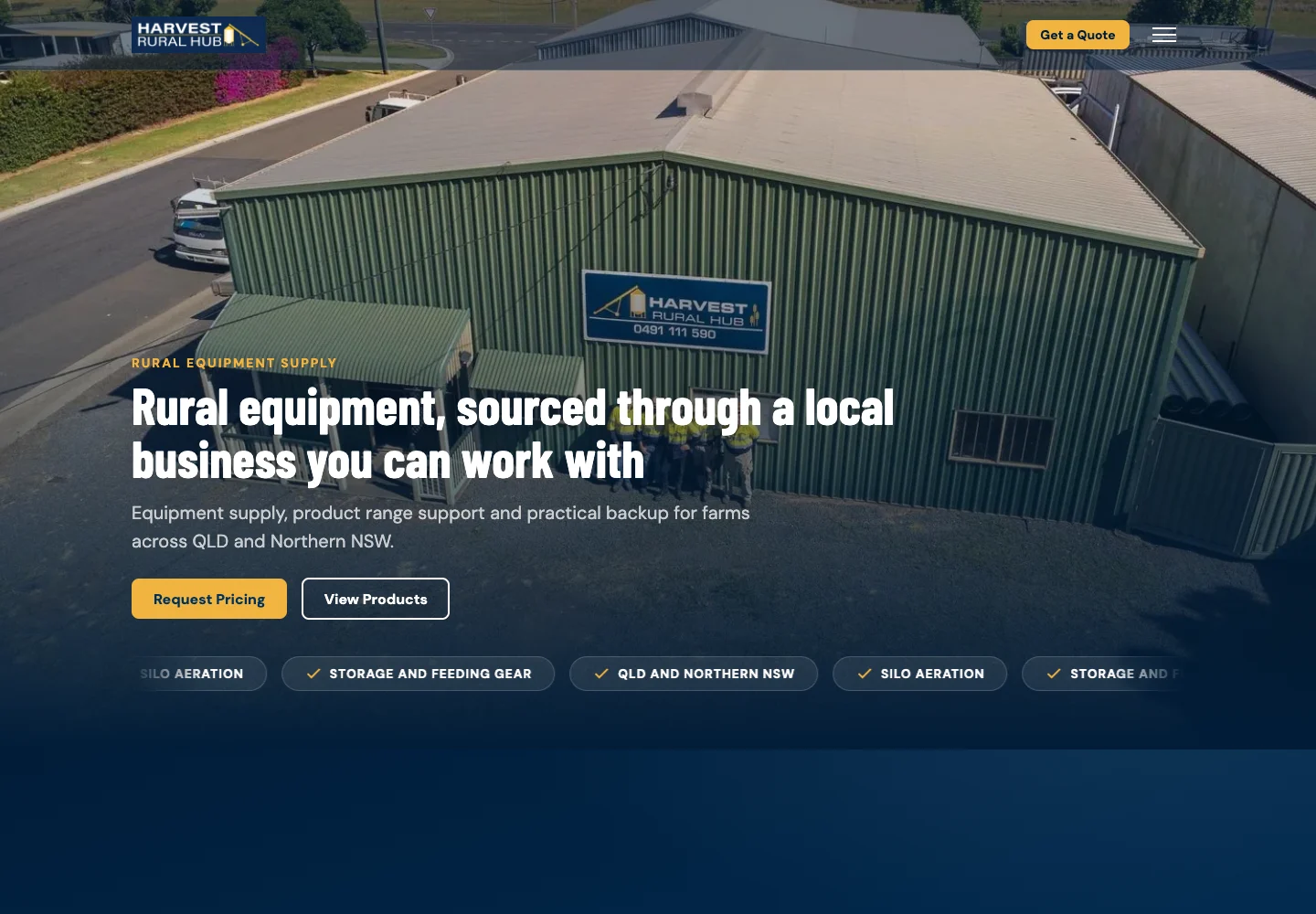
Public website capture. This story describes Knighton Digital's contribution; websites can continue to change after delivery.
Beyond the website
Product knowledge, made practical.
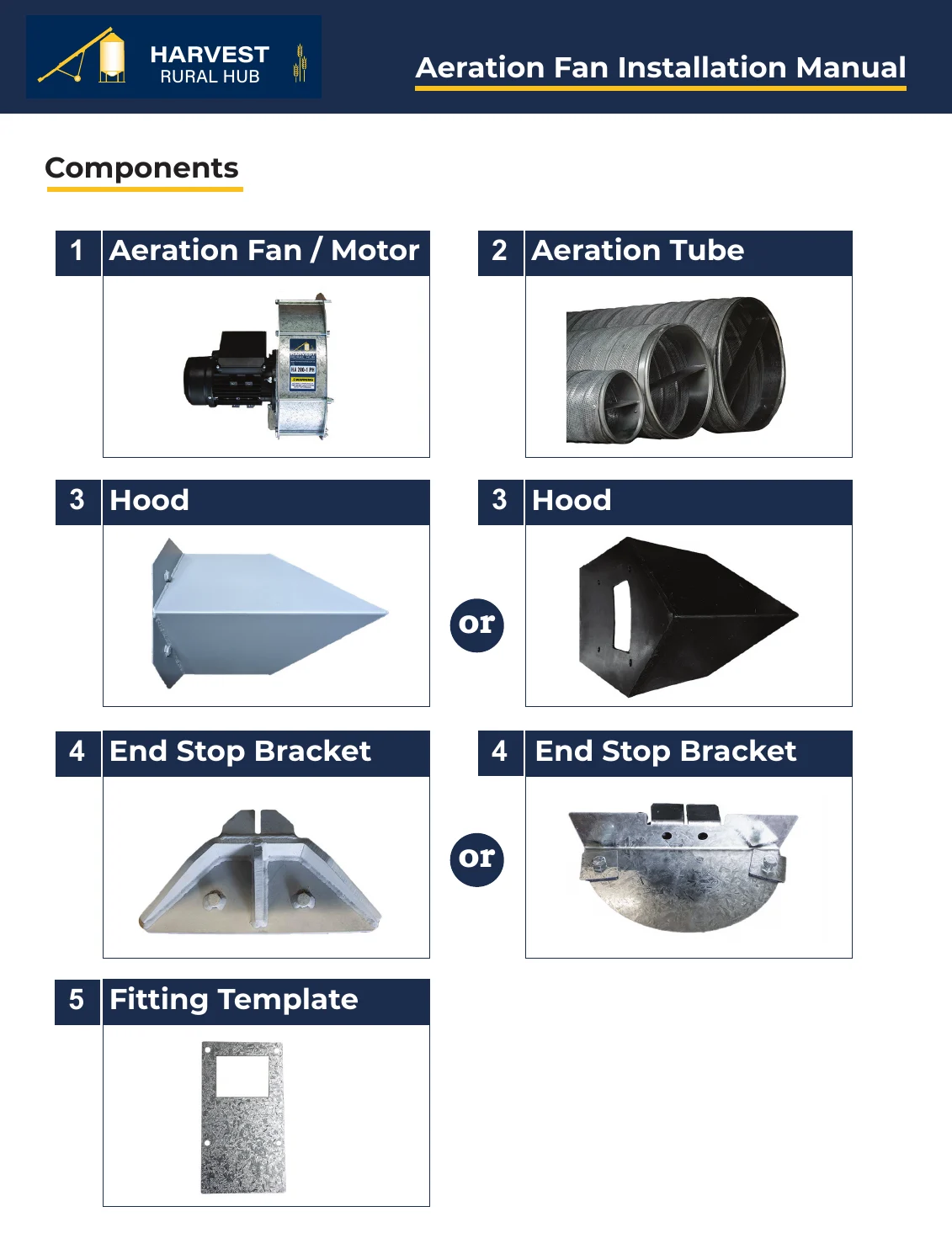
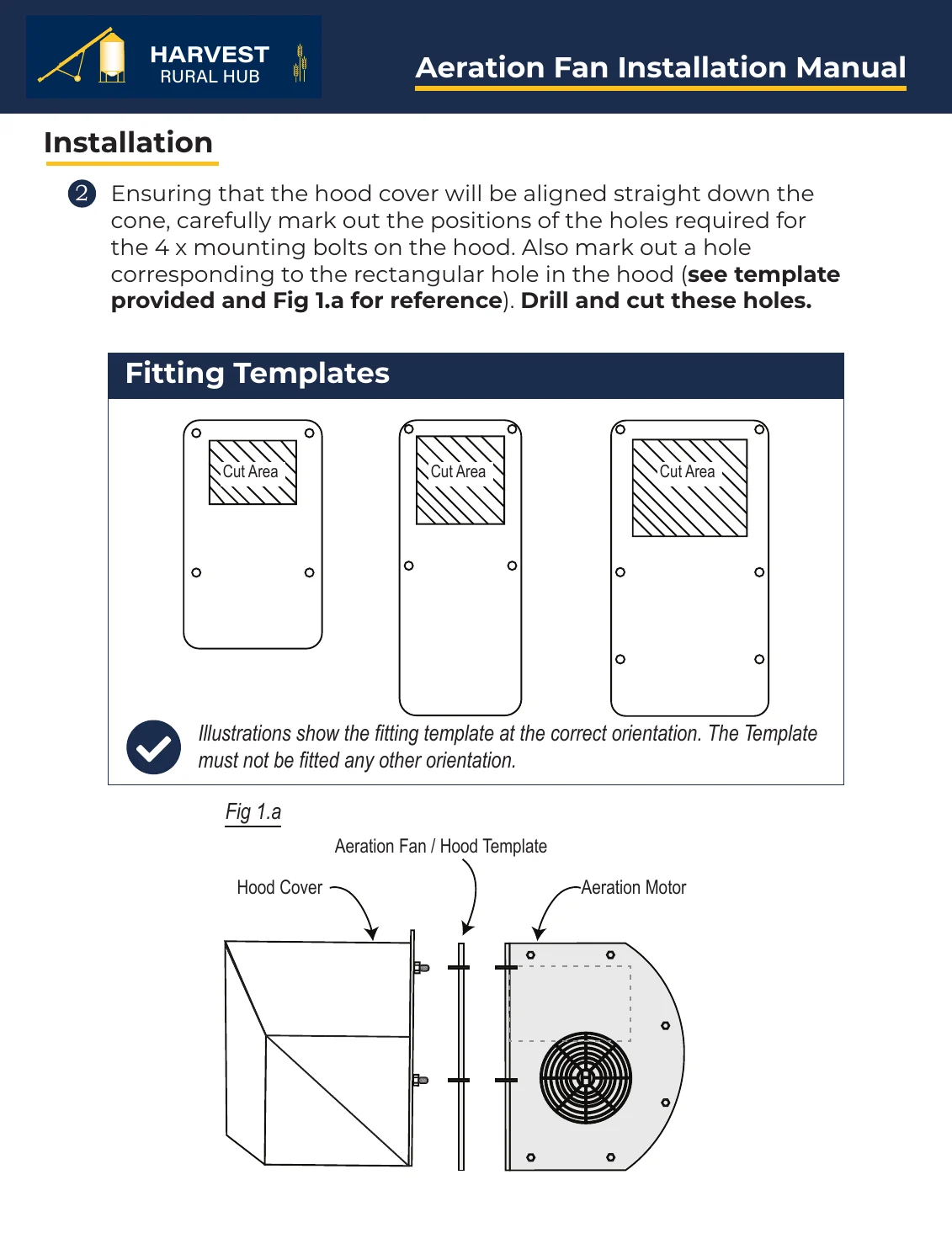
Research, writing, illustration and document design came together in the aeration fan installation manual. These selected archive pages show how the product was explained beyond the website.
Fitting-template illustrations and an exploded assembly view sit beside the written installation explanation.
September 2021 edition, page 5. Historical manual artwork; old contact/footer omitted.
Website views
Make the technical detail useful.
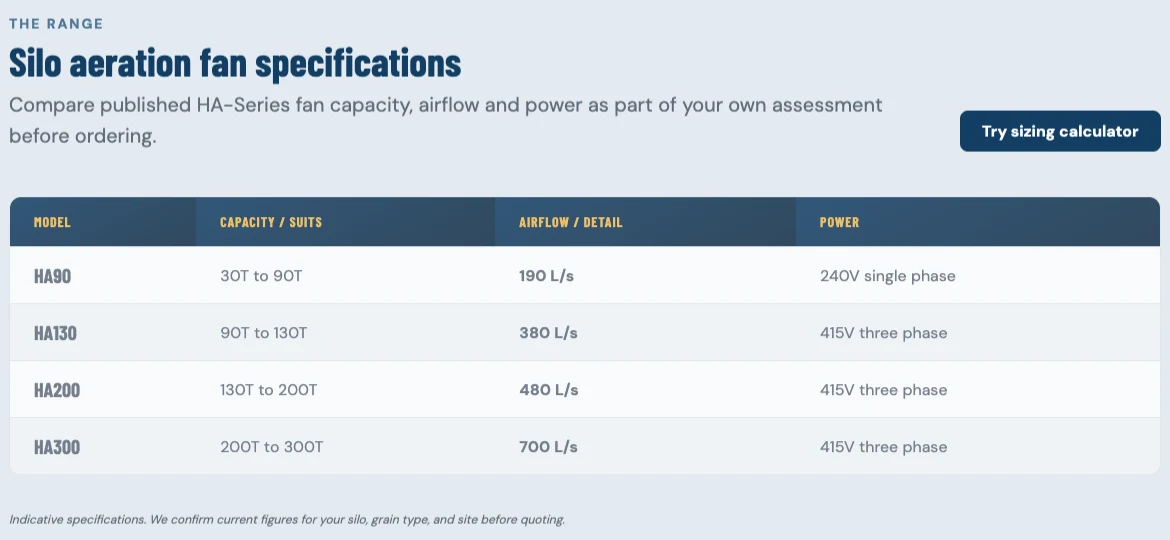
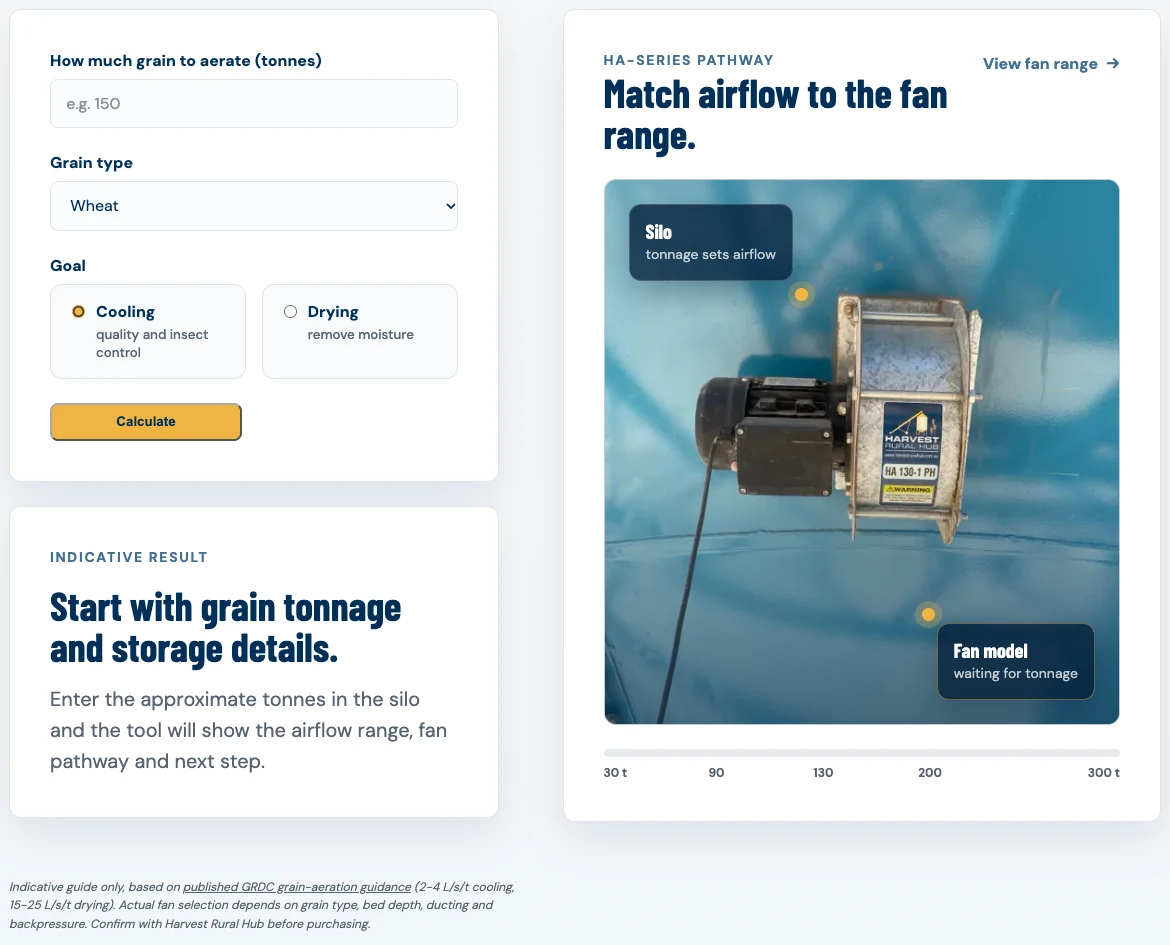
A range table and a focused calculator give product information different jobs. These public interface details show the inputs, comparisons and confirmation advice alongside the next step.
The published range table keeps model, capacity, airflow and power together, with a route to the sizing calculator and advice to confirm current specifications.
Public website detail captured 31 October 2026. Capture date records this view, not a launch date.
The interface asks for tonnage, grain type and the aim before showing an indicative result. The selected view shows the initial state and its caveats; no calculation was performed.
Public website detail captured 31 October 2026. Capture date records this view, not a launch date.
From the retained evidence
Clearer product information for search.
Product pages carry information that search engines can read behind the scenes. The retained checks show fewer pages flagged with rich-result validation errors in that information.
Pages with rich-result errorsSame 26 page addresses
19 of 26 pages
0 of 26 pages
0 pages26 pages
The check looks for missing or invalid information needed for enhanced search listings. Zero error pages is a validation result; warnings remained.
The context
The business.
Harvest Rural Hub brings together equipment and practical knowledge across several rural product areas. The work needed to make that breadth understandable while keeping the detail that helps someone choose and use a particular product.
Silo aeration, grain storage, fertiliser storage and livestock feeding each needed a recognisable place in the range. The business also needed ways to explain the products beyond a short web page, including the components and fitting detail in an installation manual.
What we needed to understand.
We needed to learn the products, how the business explained them and which distinctions mattered to the customer. A useful description and a useful installation illustration ask different questions. The content had to reflect the product knowledge and the practical situation in which it would be used.
How we approached it.
Product research and writing informed the website structure and reusable page patterns. That understanding also went into the aeration-fan installation manual through content, illustrations and document design. Google Business Profile setup and optimisation supported the wider business presence.
What we put together.
Installation-manual research, writing and illustrations
Product copy grounded in the business and its offering
Google Business Profile setup and optimisation
A responsive rural business website
Connected product and service architecture
Consistent brand, content and reusable page patterns
A closer look
The detail behind the work.
A broad range, with a clear way through.
Silo aeration, grain storage, fertiliser storage and livestock feeding each have a clear route within the website. Each product line has space for its own detail while sharing a consistent way of presenting information, giving the broader offering a structure to grow within.
Build the pattern once, then keep it useful.
Reusable content and page patterns make a growing range easier to present consistently. The foundation supports future additions without asking every new item to start from an empty page.
Product knowledge before product copy.
The writing grew from learning the customer's business, products and way of working. That context matters when explaining a technical product: the content needs to sound like the business and carry the detail a buyer actually needs.
Useful information beyond the sale.
Research, content, illustrations and document design came together in the aeration fan installation manual. Component references and fitting drawings gave the product information a practical format beyond the website. Selected pages from the 2021 edition are shown above.
The business presence around the website.
Google Business Profile setup and optimisation also formed part of the work. The profile and the website are different places customers can encounter the business; each needs clear, relevant business information.
More than a page
The foundations around the delivery.
01
Range architecture
Connected categories and useful paths through the offering.
02
Content patterns
A repeatable structure for product and service information.
03
Design consistency
Shared brand and interface foundations across the website.
The practical value.
The same product knowledge can serve several useful purposes: a clearer route through the range, a particular product explanation and a document someone can use during installation. Shared page patterns also give the next addition a starting point while leaving room for its own detail.
Learning the products supported the website, the installation manual and its illustrations. The value came from carrying that understanding across useful formats.